 Your employer has a duty to keep you safe and free from harm. One potential hazard in the workplace is noise. Exposure to excessive levels of noise can cause deafness – deafness caused by industry or employment is often referred to as industrial deafness. As people’s hearing deteriorates with age, many people who have worked in industry may not be aware that they are suffering from industrial deafness. Noise is measured in decibels (dB).
If noise is a potential hazard in your workplace your employer should have carried out a noise assessment or noise survey. This would involve checking the noise levels at different places through the premises and checking the noise levels emitted from all the various types of machinery. Your employer may also evaluate the noise exposure of each individual employer. Noise exposure is averaged out over an 8 hour working day.
Deafness claims are historic in nature as they can involve bringing a claim against one or more of your former employers. In essence you would seek to bring a claim against each and every employer who exposed you to excessive levels of noise after 1963. You cannot bring a claim for exposure to noise where the exposure occurred before 1963. Noise exposure before 1963 may have caused damage to hearing but in law it is classed as non-negligent exposure as employers were not aware of the dangers of noise at that time. A publication in 1963 meant that employers can be held liable for exposure to noise where the exposure occurred after 1963.
Read More
Who is at Fault in an Accident on a Roundabout Exit?
 Roundabouts can be very daunting, especially ones that seem to have never ending amounts of exits! The markings for lanes and exits can be very confusing and therefore accidents which happen on roundabouts are unfortunately one of the most common types of road traffic accidents we deal with here at The Injury Lawyers.
The common circumstances on a roundabout are vehicles pulling onto the roundabout when it is unclear to do so, vehicles changing lanes to exit the roundabout, and also vehicles continuing around the roundabout in the wrong lane which causes accident’s when other vehicles are trying to exit.
The Highway Code provides some general rules on the use of roundabouts, however, even when following these instructions, accidents can still occur as other road users can be careless.
Read More
Injured After An Accident on Stairs
 We’ve all had those moments where we’ve been walking down the stairs and had a wobble; if we’re lucky we manage to save ourselves or if we do fall it is only a couple of stairs and the damage is limited to a temporary knock of our confidence. However, for all the people that don’t fall, there are plenty that do!
Statistics say you are most likely to have an accident on the stairs in your own home but there are many stair based accidents in the workplace as well. In fact there is a league table of the worst performing industries in terms of this type of accident with: Service/Hospitality, Manufacture and Construction being the three worst offenders.
This is not surprising when you think that these are the industries most likely to involve carrying heavy, bulky or hazardous items up and down stairways. Of course it could be the case that you are not at work and have a fall, for example if you were in the library or the bank.
Read More
Whiplash Compensation for Children and Where Payouts are Kept
 Although, particularly smaller children, are usually well protected in a vehicle with car seats and booster seats, whiplash can still be a factor if a child is involved in a road traffic accident.
If your child has suffered from whiplash, can they make a claim for compensation?
The simple answer is: not by themselves; the child themselves cannot start a claim as they are under the age of 18 and therefore cannot enter into legal proceedings – however an appropriate adult can act on their behalf for a whiplash claim and it will run in pretty much the same way an adult claim would.
Read More
Claiming for Whiplash After Accident
 You may not be surprised to hear that whiplash claims are one of the most common types of personal injury claims. Whiplash claims unfortunately seem to attract a lot of bad press as well.
However anyone who has ever suffered a whiplash type injury will know that whiplash can cause a great deal of pain, discomfort and inconvenience. Whiplash is a genuine injury and an injury which is compensatable in law. I believe the main difficulty or the reason why whiplash claims receives such a bad press is due to the perceived difficulty in diagnosing the condition.
If you have sustained whiplash following a road traffic accident then it is your right to claim compensation.
Read More
Moped Accident Compensation Claims
 A moped is a motorcycle that has a maximum design speed of approximately 31 miles per hour and can be driven on the road at the age of 16 with a provisional licence and “L” plates. Making these vehicles extremely popular with teenagers. They are a perfect for teenagers who are starting to gain their independence.
However, as with motorcycles, they are involved in a high number of accidents on the road. How, if they can only go 31mph? Well the answer is that mainly mopeds are involved in accidents due to other road users who are not looking and checking mirrors properly.
The main scenarios include vehicles pulling out of a side road into a moped which is correctly proceeding on the main road, vehicles pulling out of stationary traffic whilst a moped is attempting to overtake the stationary traffic, and vehicles changing lanes when a moped is travelling at the side of them.
Read More
Importance of PPE in the Workplace
PPE (or Personal Protective Equipment) is of fundamental importance in the workplace to keep workers safe and to enable workers to do their job properly. PPE can include boots, overalls, high visibility vests, gloves, hearing protection, hard hats etc. Without PPE the chances of injury are undoubtedly increased. The purpose of PPE is to ensure workers are kept as safe as possible. The PPE relevant to you would depend on your role and the environment that you work in.
If you think of a building site, the typical PPE is usually hard hats, high visibility vests and boots. On a building site there may be loose bricks overhead so you can see why hard hats are required. High visibility vests are also useful as there may be vehicles coming in and out of the building site. Boots are also necessary and would help prevent injury if anything was dropped onto the workers foot.
If you think of an alternative environment, such as a train depot or power station, PPE should include hearing protection as noise levels may reach levels that could potentially be harmful. On a train depot you would also expect high visibility vests so people can be seen. If a person uses vibratory tools as part of their job, such as jack hammers, gloves may be necessary to help prevent hand arm vibration syndrome (also known as vibration white finger).
Read More
 At The Injury Lawyers we deal with all types of personal injury claims. We deal with children’s personal injury claims too. In law a child is often referred to as a minor. In this blog I will attempt to explain the difference between a child’s personal injury claim and a standard personal injury claim brought by an adult. The first thing to note is that a minor is someone under the age of 18 years.
A child’s claim must commonly be brought through a litigation friend. The litigation friend must be an adult and is often a parent or guardian. The litigation friend must act in the best interests of the child at all times. The litigation friend must not have an interest in the claim. For example if a child is injured in a road traffic accident and a parent was the driver of the vehicle, that parent may not be able to act as litigation friend for the child, as they clearly have an interest in the claim. In certain situations a professional litigation friend can be appointed by the solicitor or the Courts.
The limitation period also differs in respect of children’s claims. The limitation period applies to all personal injury claims. After an accident or injury you have a window in which you can pursue a claim for injury and loss. This window is the limitation period. If the limitation period expires and you have not issued Court Proceedings on your claim, then you may lose your right to claim compensation.
Read More
Being Disadvantaged On The Open Labour Market
 To say someone is at a disadvantage on the open labour market means that, as a result of an accident or injury, they are disadvantaged in finding work, holding down work, gaining a promotion – general career type things etc. You can try and recover compensation if an accident or injury had caused you some kind of disadvantage on the open labour market.
Awards in respect of disadvantage on the open labour market can often be quite big. However this will always depend on the facts of the particular case and the level of handicap.
Say for example you had been working as a painter and decorator all of your life and you sustained a severe injury such as the loss of your right hand. You would have great difficulty carrying on with your job as a painter and decorator because you may need both hands to hold a brush in one and a paint tin in the other. In finding alternative employment you are also at a disadvantage – the potential jobs that you could do are restricted because of your injury.
Read More
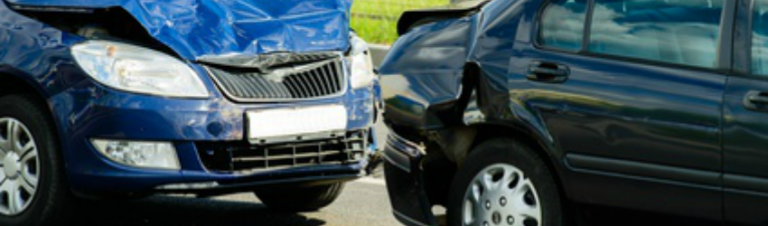
Law on road accidents claims due to a sudden stop!
Generally speaking if Driver B caused their vehicle to crash into the back of Driver A’s vehicle, then Driver B would be at fault.
This is, of course, a typical rear end shunt scenario whereby liability is usually attached to the driver who drove their vehicle into collision with the vehicle in front.
As a driver myself, this must be the correct decision as you have no control over the vehicle that’s driving behind you. However, in some strange and unusual circumstances, Driver A in the above scenario could be held at fault.
Read More